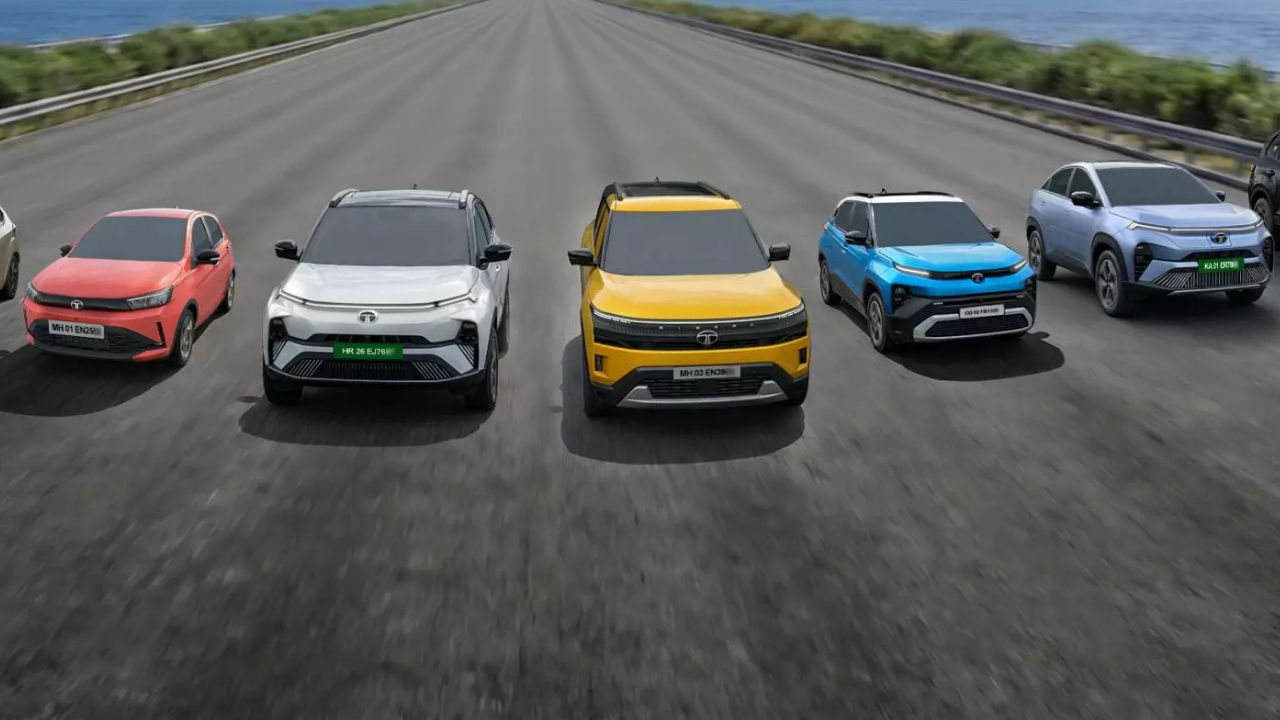
Tata Motors Passenger Vehicles adopts Tata.Cars as consumer-facing identity
India
August 31, 2026
Following the demerger of Tata Motors Limited, Tata Motors Passenger Vehicles Limited (TMPV) has introduced a new consumer-facing identity, Tata.Cars. While the company will continue to use Tata Motors Passenger Vehicles Limited as its legal and corporate name, Tata.Cars will now be used across consumer touchpoints. Vivek Srivatsa , Chief Commercial Officer, Tata Passenger Electric Mobility Ltd., told the press that the new identity is a consequence of the passenger vehicle business becoming an independent company, while also giving it an opportunity to reset its positioning for the next phase of growth. “We are an independent company now as a result of the corporate demerger, so it is good to get an independent customer-facing identity. Second, we have recently announced our ambitions for the future, including moving towards 20% market share and 30% EV penetration, among other things. While we have had quite a few milestones in the past, this is also a good way for us to reboot for the future and have customers look at us as a company which is more future-oriented,” Srivatsa said. What changes with Tata.Cars? The shift to Tata.Cars is primarily a change in the consumer-facing identity rather than the corporate structure. Tata Motors Passenger Vehicles Limited will continue to be used for legal and statutory purposes, while Tata.Cars will appear across digital, social and retail consumer touchpoints. Srivatsa said the digital transition will happen immediately, while the physical changes across the company's retail network will take longer. “The company name is not changing. Tata Motors Passenger Vehicles will remain the corporate name for all legal and statutory purposes. What is changing is the customer-facing identity, and we will be called Tata.Cars across our website, digital channels, social media pages and retail touchpoints. The digital website and social handles will change immediately, while the retail identity will take around six months to a year because it involves physical changes across around 1,600 sales points and close to 1,200 customer service centres,” he said. The change also includes a new visual and sonic identity. The company is introducing a new corporate colour, Ambition Blue, along with a sonic identity and a design system called Parallel Pathways. Its brand promise is also shifting to “Nothing’s Too Far”. A change in communication approach Srivatsa said Tata.Cars will not be positioned as a separate proposition aimed at one particular generation, including Gen Z. Instead, the company plans to focus on simplifying its communication and making it more consumer-centric. The automotive category, he said, often relies on technical terminology that may not necessarily reflect how consumers think about cars. Tata.Cars is intended to use simpler language while remaining relevant across generations. “There is no specific campaign for the brand name change because it is not a campaign-dependent thing. It will slowly percolate over many years, because brand trust is built over decades. A brand name, brand design system and brand promise will also take some time. Every single communication will adopt the new colour, sonic signature and design system, and all our activities will be around challenging what is possible, whether it is new technology, our promise to customers or our showroom and service experiences,” Srivatsa said. The new identity is intended to bring the passenger vehicle business under a simpler consumer-facing architecture, rather than replace the existing equity around the Tata name. For the brand, the immediate task is therefore one of transition, with the new identity gradually appearing across digital platforms, dealerships, service centres and communications.