J&K’s EV push comes with a winter test
India
September 15, 2026
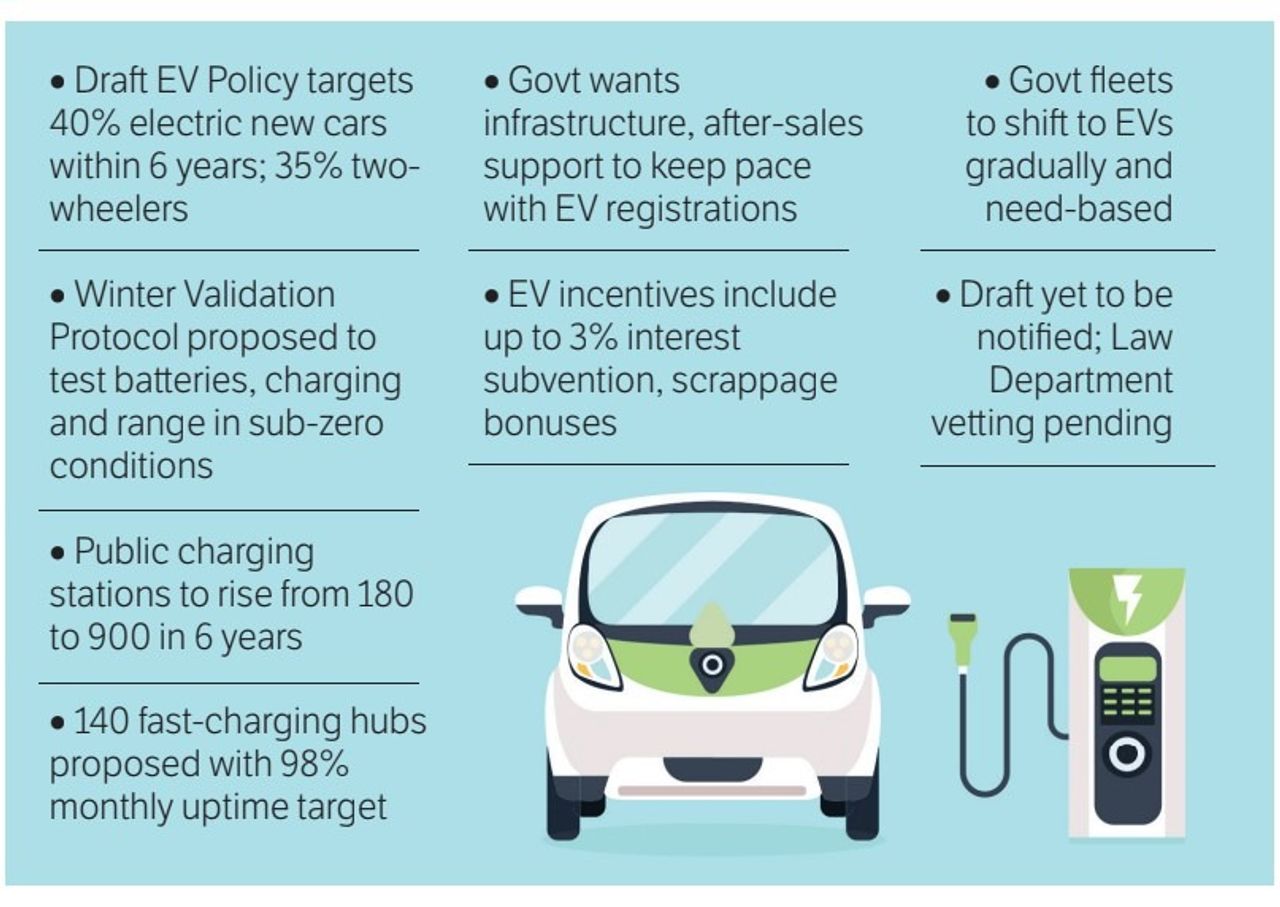
Srinagar, Sep 14: Jammu and Kashmir is preparing for a significant shift towards electric mobility, but the administration is taking a cautious approach, seeking to ensure charging infrastructure, winter performance and after-sales support are in place before electric vehicle (EV) adoption accelerates. The Draft Jammu and Kashmir Electric Vehicle Policy 2026 proposes that electric vehicles account for 40 percent of new personal four-wheeler registrations within six years of its adoption. The proposed targets are 35 percent for two-wheelers, 30 percent for buses and 25 percent for taxis and shared mobility vehicles. The draft policy has not yet been notified. It was recently reviewed by Chief Secretary Atal Dulloo, who directed that the framework follow a “reliability-first and fiscally prudent” approach. The Law Department has been asked to undertake legal vetting before the policy is finalised. The policy formulation process began nearly four years ago, with the government constituting a committee on October 20, 2022, to examine EV incentives, commercial fleet conversion, charging infrastructure, road safety, research, innovation and skill development. The latest draft has been prepared by the Transport Department with support from the Centre for Innovation and Transformation in Governance (CITaG). A major focus of the draft is J&K’s winter conditions. Sub-zero temperatures, mountainous terrain and difficult road conditions can affect battery performance, vehicle range and charging efficiency. The proposed policy therefore provides for a dedicated Winter Validation Protocol to assess battery thermal behaviour, low-temperature charging and the impact of cabin heating on vehicle performance. Dulloo has also directed that EV deployment be aligned with J&K’s terrain, climate and operational requirements, particularly on difficult routes, with vehicles and charging infrastructure validated under actual field conditions. A senior government official involved in the policy process said the administration did not want registrations to outpace infrastructure. “Electric mobility cannot be driven only by registration targets. In Jammu and Kashmir, consumers need confidence that their vehicles will perform in winter, that charging points will be available and that servicing will be accessible when required,” the official said. Charging infrastructure is consequently at the heart of the proposed framework. J&K currently has around 180 public charging stations. The draft proposes increasing this to 450 sites by the third year and 900 by the sixth year. It also proposes 140 priority fast-charging hubs, each expected to maintain at least 98 per cent monthly uptime — an indication that the government intends to measure charging reliability rather than merely count installations. For electric two-wheelers, dealers say consumer confidence will be critical. A Srinagar-based electric-scooter dealer, Umar Ahmad said demand was increasing, but buyers remained particularly concerned about winter range, battery life and charging availability. “Customers are interested in electric scooters because of the lower running cost, but winter performance is one of the first questions they ask. People want to know how much range they will actually get in cold weather and where they can charge if they travel outside Srinagar,” the dealer said. “Once customers know that charging is reliable and servicing is available, adoption can increase much faster. At present, infrastructure and confidence are bigger issues than interest in the technology,” the dealer said. The proposed targets are ambitious. A 40 percent share for personal four-wheelers would mean two out of every five new cars being electric within six years, while the 35 percent two-wheeler target would mean more than one in three new registrations. The draft also proposes financial support, including interest subvention of up to 3 percent per annum or rolling top-up support, with both benefits not available simultaneously. An annual scrappage exchange bonus has also been proposed for up to three years through authorised scrappage channels. Government fleets are proposed to transition gradually to EVs, although Dulloo has directed that replacements be phased and need-based, taking account of local terrain, climate and operational requirements. The policy also seeks to link EV charging with the power system through Time-of-Day tariffs and charging during solar hours. It proposes 40 percent renewable-energy integration in charging operations during the policy period. Transport Secretary Avny Lavasa said the draft had been structured around eight strategic pillars covering vehicle adoption, charging infrastructure, workforce development, fiscal support, power-system integration and environmental outcomes.