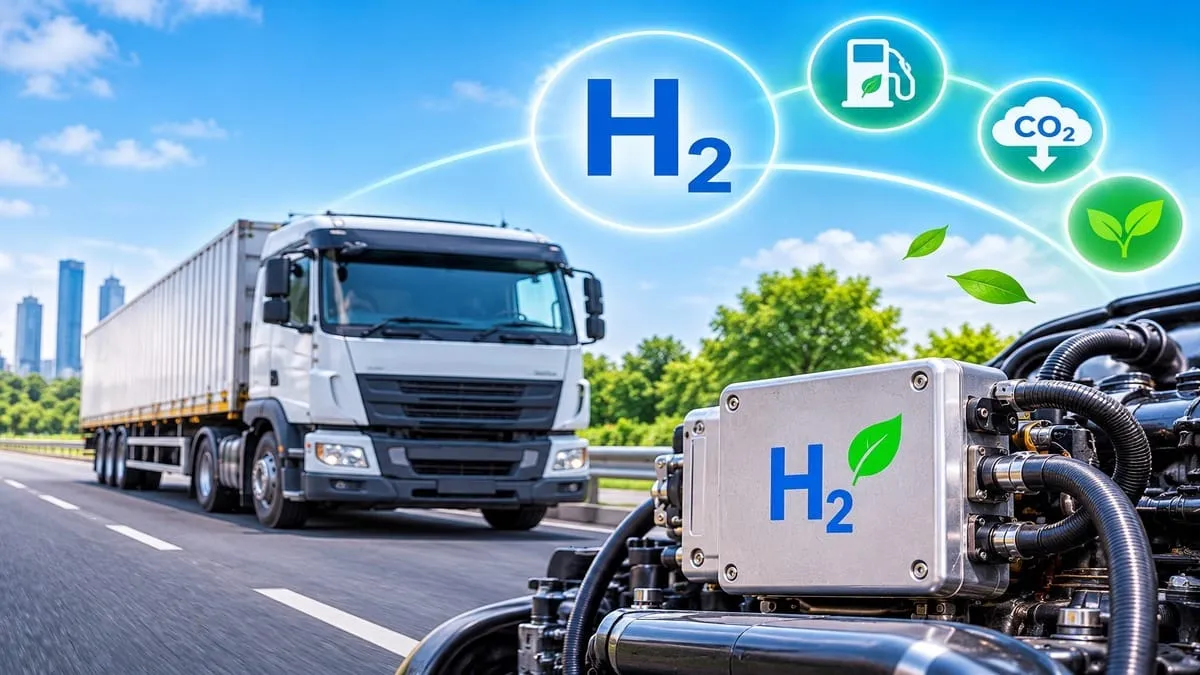
Beyond Electric Vehicles: How hydrogen-based retrofitting can reduce diesel consumption and carbon emissions
India
November 19, 2026
India moves on diesel. Everyday trucks transport goods between cities, factories and hospitals are powered by generators; construction and industrial machinery operate on it. The typical solution to the carbon dilemma is to replace all carbon with cars that don’t use carbon. The answer to the carbon problem is always to replace all carbon with electric or fuel-cell cars. Fleets do not change often, and the replacement is costly. Co-founder of Saarthi GreenTech Alok Kumar asked another, much more practical question: What if the engines already on the road can be made cleaner starting now? A partnership across borders Alok is the founder and CEO of Saarthi GreenTech along with his co-founder Karunjit Kumar Dhir. It is the result of a collaboration between the two countries, with Dhir making a public effort to thank InvestmentNSW and the Australian government for encouraging and supporting the collaboration between the two countries to make this possible. The company touts itself as the first completely indigenous manufacturing company to shift the commercial automotive industry from diesel towards hydrogen-based hybrid operation in India. Mission is not just about wishing; it’s about doing. The company is not saying customers to give up their cars. It’s asking them to install them. The concept is to keep the engine and add hydrogen to it. Alok’s philosophy is very easy to understand. Saarthi preserves the diesel engine architecture and adds a smart hydrogen system to it, he tells Energetica India during an interview. Retrofitting is a bridge, he says, rather than an opportunity to wait for full fleet replacement to be driven by EVs or fuel-cell vehicles to completely scrap the existing fleet. The system simply injects a carefully controlled amount of hydrogen into the air intake of an existing diesel engine, thereby enhancing the combustion process and harnessing more useful energy from every litre of diesel. He references global research and development with dual-fuel technology hydrogen/diesel that demonstrates that whenever hydrogen is used appropriately, it offers improved brake thermal efficiency and reduced CO, HC and particulate emissions. The benefit is accessible to any fleet owner. When you reduce the amount of diesel that you burn, you reduce your fuel cost, while also reducing your emissions. Decarbonisation is no longer a cost that the business has to bear and is instead a saving that it can count. Inventions for the Indian engines. Saarthi’s patented electrolyser-based hydrogen fuel system is at the heart of the product. It renders diesel-powered engines into hydrogen-powered hybrid engines, reducing fuel consumption and pollutants. It is marketed as the K series, with variants like K20, K30, K40 and K50, each geared for a specific engine size. This is because the sizing to the engine capacity demonstrates an understanding of the market. Many commercial vehicles and engines are in use, and even the smallest engine retrofit would not appeal to many customers. Variants are a variety of possibilities that enable the idea to be used by more customer segments. From concept to production line Years of work are required to develop patented technology before it reaches the customer. The milestone was the first factory of Saarthi producing these systems in Pune. During the inauguration, Alok mentioned that opening the factory was a milestone towards fuel saving and carbon footprint reduction after years of investment in the technology and project. He also said the company’s patented technology and strategic investments reflect its commitment to transforming the clean-tech landscape and tackling pressing problems in the automotive and industrial sectors. The participants of the launch included industry representatives, among them logistics companies. This is important because logistics companies are among the customers who also feel the impact of the cost of diesel the most. Gathering evidence for your claim. There are a lot of green technologies which fail due to the fact that the claims can’t be checked. Alok has sought to tackle that head-on. He says Saarthi’s results are credible for two reasons: First, it’s an auditable process – any external agency can review lab reports, stack tests and fuel baselines; second, it’s directly tied to the P&L – fuel savings are real operating cost reductions. This is assisted by the company’s GreenVision platform. A run-hour, load, fuel rate, hydrogen use and emissions proxy are sent via an IoT device that is connected to each retrofitted engine. This ensures that customers get continuous proof of what the system does rather than a one-off claim when the system is installed. A voice in India’s Hydrogen conversation Alok’s role also includes speaking on India’s hydrogen future in general. He highlighted that India’s renewable energy infrastructure is growing, but there are challenges of availability, reliability and transmission. He was honest that the cost of green hydrogen is still higher than that of conventional fossil fuels due to the large initial investment required for renewable infrastructure and electrolysis technology. He suggested reducing the cost of the initial investment in solar and wind installations through policy support, either in the form of subsidies, grants or tax deductions, and public procurement plans for green hydrogen for public transport and government fleets to drive demand. His retrofit solution is a complement to the national scheme. He adds that the Green Hydrogen Mission in India aims to reduce almost 50 million tonnes of CO₂ annually by 2030. According to him, retrofitting is not the solution for large-scale hydrogen production and fuel-cell mobility, but it can be used for a very large part of the low-hanging fruit. Also Read: Cyclone Akvan: APSDMA predicts landfall along Andhra Pradesh-Odisha coast; Heavy rainfall and strong winds expected The lessons from his journey Alok Kumar’s story is about an entrepreneur opting for the pragmatic route while turning down the more idealistic one. Rather than waiting for the best of the future, when fleets and machines would be all electric or hydrogen-powered, he created a solution for the vehicles and machines that were already on the road. What is notable is that there are several points to highlight: * Pragmatism. The engines […]