The terrestrial shift powering India's auto logistics
India
November 26, 2026
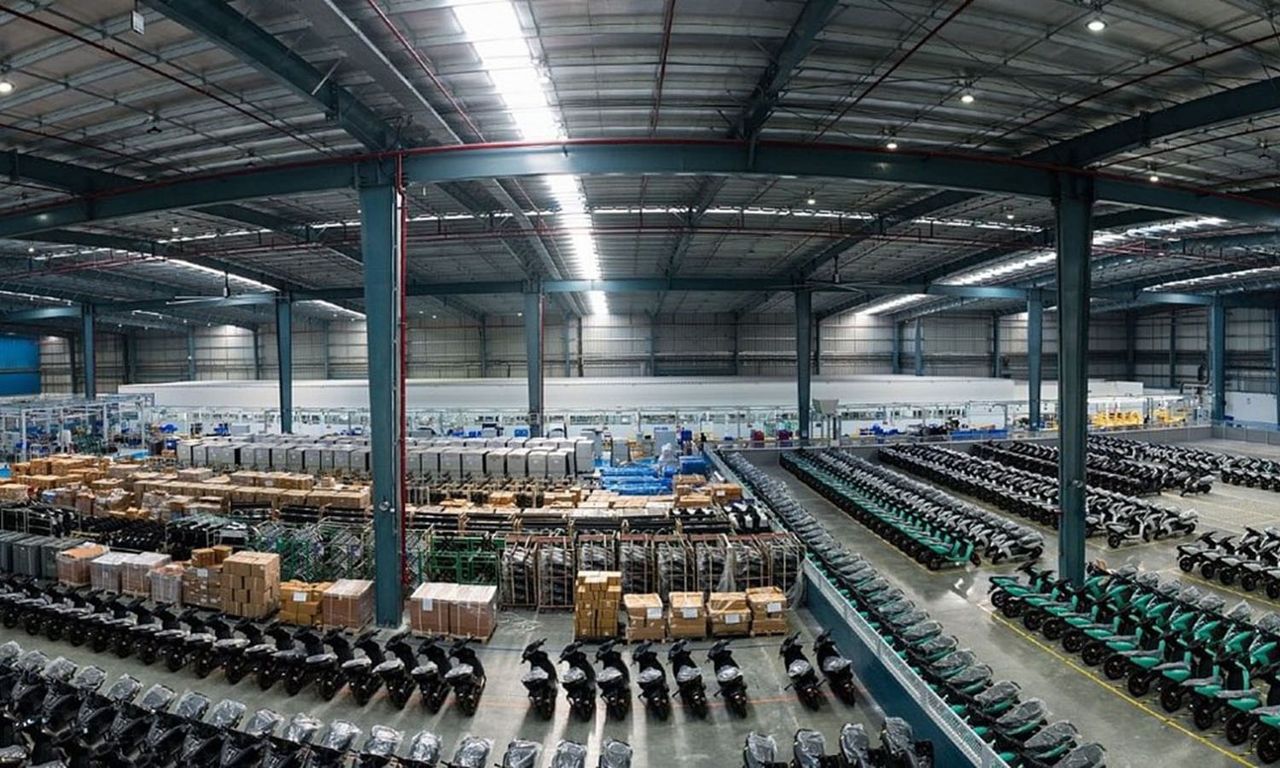
The Indian automotive industry's current expansion is distinctly visible in recent market data. According to the Society of Indian Automobile Manufacturers (SIAM), passenger vehicles logged a 26% growth in the first quarter of the fiscal year. Export volumes are moving in tandem, with commercial vehicle exports rising by 43.3% during the same period to hit record highs. Furthermore, the pivot towards electric vehicles is accelerating. Vahan data shows that retail sales of electric passenger vehicles crossed 300,000 units by early November 2026, representing a 66% year-on-year growth. Driven by government initiatives such as the National Logistics Policy and the PM Gati Shakti National Master Plan, there is a concerted effort to harmonise India’s logistics landscape. The objective is to reduce logistics costs from a double-digit percentage of GDP to global standards of around 8%. In the automotive sector, this mandate has sparked a significant modal shift. Manufacturers and third-party logistics providers are increasingly steering away from an over-reliance on roadways, pivoting instead towards railways and Roll-on/Roll-off coastal shipping. Yet, the success of this multimodal freight revolution hinges entirely on land-based infrastructure. Without strategically located, highly advanced industrial and logistics parks to serve as the critical nodes between railheads, ports, and highways, the railway and coastal shipping shift cannot reach its full potential. To understand how this infrastructure is evolving to support the overhaul, one must look at the developers building the backbone of India's new supply chain. Grade-A logistics parks are no longer merely massive storage sheds; they are highly engineered, strategically positioned hubs designed to facilitate rapid, high-volume automotive distribution. Aditi Kumar, Joint Managing Director at TVS Industrial & Logistics Parks, is at the forefront of this infrastructural evolution. She points out that the sheer geography of India's new multimodal freight corridors dictates where these modern parks must be situated. "Industrial and logistics parks located along expressways, national highways, dedicated freight corridors and port-access routes, particularly near established and emerging manufacturing clusters, play a critical role in enabling efficient movement of goods," explains Kumar. The strategic placement of these facilities is not coincidental; it is a calculated move to interface seamlessly with the new rail and shipping networks. "Strategic locations help reduce transit times, improve fleet utilisation, minimise turnaround time and optimise overall logistics costs." The mechanics of finished vehicle logistics are inherently complex. Vehicles are high-value, bulky assets that are prone to transit damage. When automotive manufacturers utilise the Automobile Freight Train Operator scheme to move thousands of cars via rail, or when they charter vessels to ship vehicles along India's extensive coastline, these bulk shipments must eventually be offloaded, inspected, stored, and distributed via road for the final mile. This is where the design of the logistics park becomes critical. Aditi notes that TVS ILP designs its facilities specifically to handle this intensity. "These parks are designed to support high-volume operations through wide internal roads, efficient truck movement, multiple loading and unloading bays, dedicated parking and staging areas, and scalable warehousing infrastructure," she says. When a vessel docks, or a dedicated freight train arrives, the sheer volume of vehicles requires sprawling yards and meticulously planned ingress and egress routes to prevent crippling bottlenecks. Furthermore, the geographical footprint of automotive consumption in India is changing. While metropolitan areas traditionally dominated vehicle sales, the rising purchasing power in Tier-2 and Tier-3 cities has forced manufacturers to decentralise their distribution networks. Relying on a single mega-hub near Delhi or Chennai is no longer sufficient to serve the entire subcontinent promptly. Recognising this demographic and economic shift, TVS ILP has aggressively realigned its expansion strategy. "At TVS ILP, our expansion strategy places a strong emphasis on Tier-2 and Tier-3 cities, where growing manufacturing activity and consumption demand are driving the need for organised logistics infrastructure," Kumar reveals. "We are expanding our presence across emerging markets in eastern, central and southern India, including locations such as Indore, Cuttack and Siliguri." These cities are rapidly emerging as vital transit points and regional consumption hubs. By establishing Grade-A logistics parks in these precise locations, developers are bridging the gap between national rail corridors, coastal shipping routes, and the end consumer. "Our focus is on building a distributed network of Grade-A facilities that brings modern warehousing closer to regional manufacturing clusters and consumption centres, helping businesses strengthen their supply chains and serve markets more efficiently," Kumar adds. Beyond the storage and distribution of finished vehicles, the automotive overhaul demands profound changes in how components are managed before a car is even built. Modern automotive manufacturing is governed by the principles of just-in-time and just-in-sequence delivery. A typical vehicle contains thousands of individual parts, sourced from hundreds of suppliers globally and domestically. To minimise inventory holding costs and maximise factory floor space, manufacturers require these parts to arrive at the assembly line exactly when they are needed. The shift toward multimodal transport means that regional warehousing hubs must act as sophisticated holding pens and sub-assembly centres. They must synchronise the erratic arrival times of bulk freight with the precise, down-to-the-minute demands of the automotive assembly line. "Automotive supply chains depend on the timely availability of components, synchronised replenishment and the efficient distribution of finished vehicles," notes Kumar, highlighting the dual pressure on modern logistics parks to handle both inbound manufacturing logistics and outbound finished vehicle distribution. "Regional warehousing hubs located close to manufacturing facilities help optimise inventory, support just-in-time delivery requirements and improve the overall efficiency of inbound and outbound logistics." TVS ILP has successfully operationalised this concept across several strategic locations, proving that proximity to multimodal nodes is a commercial imperative. "At TVS ILP, our parks are strategically positioned to support the evolving needs of automotive and mobility businesses," Kumar explains, pointing to their facility on the eastern coast as a prime example of port-proximate synergy. "Our Vizag Park for instance, houses Toyota’s Regional Parts Centre and ATC Tires, leveraging the city’s port connectivity and access to markets across southern and eastern India." By setting up a regional parts centre in Visakhapatnam, companies can leverage coastal shipping and rail connections to receive parts in bulk, store them in a Grade-A facility, and then dispatch them with high precision. Similarly, the southern manufacturing belt relies heavily on strategic logistics hubs. "Similarly, our Hosur Park supports Ather Energy’s manufacturing and pan-India distribution operations," Kumar notes. Hosur, a massive automotive cluster bordering Bengaluru, requires exactly this kind of sophisticated infrastructure to manage the high-velocity movement of parts and finished two-wheelers. "By providing strategically located scalable infrastructure, we enable occupiers to streamline component movement, strengthen regional distribution networks and respond more efficiently to changing production and market requirements," she summarises. Perhaps the most disruptive force in the current automotive logistics landscape is the electric vehicle revolution. As the Indian government pushes ambitious adoption targets, manufacturing processes and their corresponding supply chains are being completely rewired. Electric vehicles are fundamentally different from traditional automobiles, not just in how they operate, but in how they must be stored, handled, and transported. The transition introduces heavy, highly sensitive, and potentially volatile lithium-ion battery packs into the supply chain, rendering older, traditional warehouses entirely obsolete. The logistics parks of tomorrow must be engineered today to handle the specific physical and safety requirements of battery manufacturing. This is not merely a matter of retrofitting; it demands a ground-up reimagining of structural integrity, fire safety protocols, and electrical infrastructure. "As EV and battery manufacturing scales up in India, industrial infrastructure is evolving to meet more specialised operational requirements," asserts Kumar. The demands placed on a building by an electric vehicle manufacturer are vastly superior to those of traditional producers. "These include higher electrical loads and reliable power supply for automated production lines, appropriate fire detection and suitable safety measures for the storage and handling of batteries and other critical components." Lithium-ion batteries require strict temperature control and advanced fire suppression systems capable of handling thermal runaway, a scenario where a battery fire generates its own oxygen and cannot be extinguished by conventional means. Furthermore, the sheer weight of these battery packs requires structural reinforcements that standard warehouses do not possess. "Higher clear heights, robust flooring and layouts designed to accommodate heavy machinery and advanced material-handling systems are also becoming increasingly important," Kumar details. The heavy floor load capacities are non-negotiable for logistics, where concentrated loads from battery storage racks and the heavy automated guided vehicles used to move them can easily crack sub-standard flooring. To meet these exacting standards, logistics park developers can no longer rely on speculative, one-size-fits-all construction. The industry is moving decidedly toward built-to-suit models, where the logistics developer works hand-in-glove with the automotive client from the initial design phase to final commissioning. "At TVS ILP, we offer built-to-suit solutions tailored to the specific operational requirements of our occupiers," Kumar states, outlining the company's bespoke approach to the sector. "These can include customised floor plans, enhanced power capacity, specialised storage and loading arrangements, and dedicated areas for material handling and technology-enabled operations." The market in India is still in a phase of rapid scaling and technological discovery. What a manufacturer requires today might evolve drastically over the next five years as battery chemistries change and production volumes multiply. Therefore, modern logistics infrastructure must not only be specialised but inherently flexible. "As EV manufacturers scale their production and distribution networks, flexibility and scalability are equally important," Kumar emphasises. "Our approach is to develop infrastructure that can adapt to evolving manufacturing processes and supply-chain requirements, including specialised spaces for activities such as research and development, testing tracks and assembly stations wherever required by the occupier." This holistic approach to infrastructure, where a logistics park houses research spaces, testing tracks, and sub-assembly stations alongside traditional warehousing, highlights the blurring lines between manufacturing and logistics. The modern Grade-A park is an extension of the factory floor, a critical staging ground that makes the broader national shift towards rail and coastal transport viable. The Indian government's push for Dedicated Freight Corridors is already showing immense promise. By separating freight traffic from passenger railways, these corridors guarantee higher speeds, greater load capacities, and predictable transit times. Automotive manufacturers are capitalising on this by moving high volumes of finished vehicles via specialised double-decker railway wagons. Concurrently, maritime programmes are incentivising the use of coastal waterways to bypass the congested highway networks entirely. However, a train must eventually stop, and a ship must eventually dock. The efficiency gained by moving a thousand vehicles via rail at high speeds is instantly lost if the destination railhead lacks the sprawling, efficient, Grade-A yard space required to unload, inspect, stage, and dispatch those vehicles to local dealerships. By investing heavily in Tier-2 and Tier-3 cities, upgrading infrastructure to support the heavy loads and stringent safety requirements of the electric boom, and positioning their facilities strategically along the intersections of rail, port, and road networks, they are building the land-based anchors for India's multimodal future. Ultimately, the transformation of India’s finished vehicle logistics from a road-dominated, fragmented system into a harmonised, multimodal powerhouse is well underway. The railway and coastal shipping shift is reducing carbon footprints, lowering the cost per kilometer, and bypassing highway bottlenecks. But as the industry continues to evolve, propelled by the relentless momentum of electric mobility and just-in-time manufacturing, it is the sophisticated, highly adaptable modern logistics parks that will dictate the true speed and success of this national overhaul.